
Medication Management
Chronic Pain Medication Management in El Paso
Individualized medication care with responsible follow-up and monitoring
Medication can play an important role in managing chronic pain for some patients. At Medway Pain Center, medication management begins with an individualized evaluation of your condition, medical history, current medications, previous treatments, response to therapy and treatment goals.
Led by Dr. Tochi Umunakwe, a fellowship-trained, double board-certified pain management physician with over 13 years of medical experience, our approach emphasizes responsible prescribing, ongoing monitoring and treatment plans designed around each patient’s clinical needs.
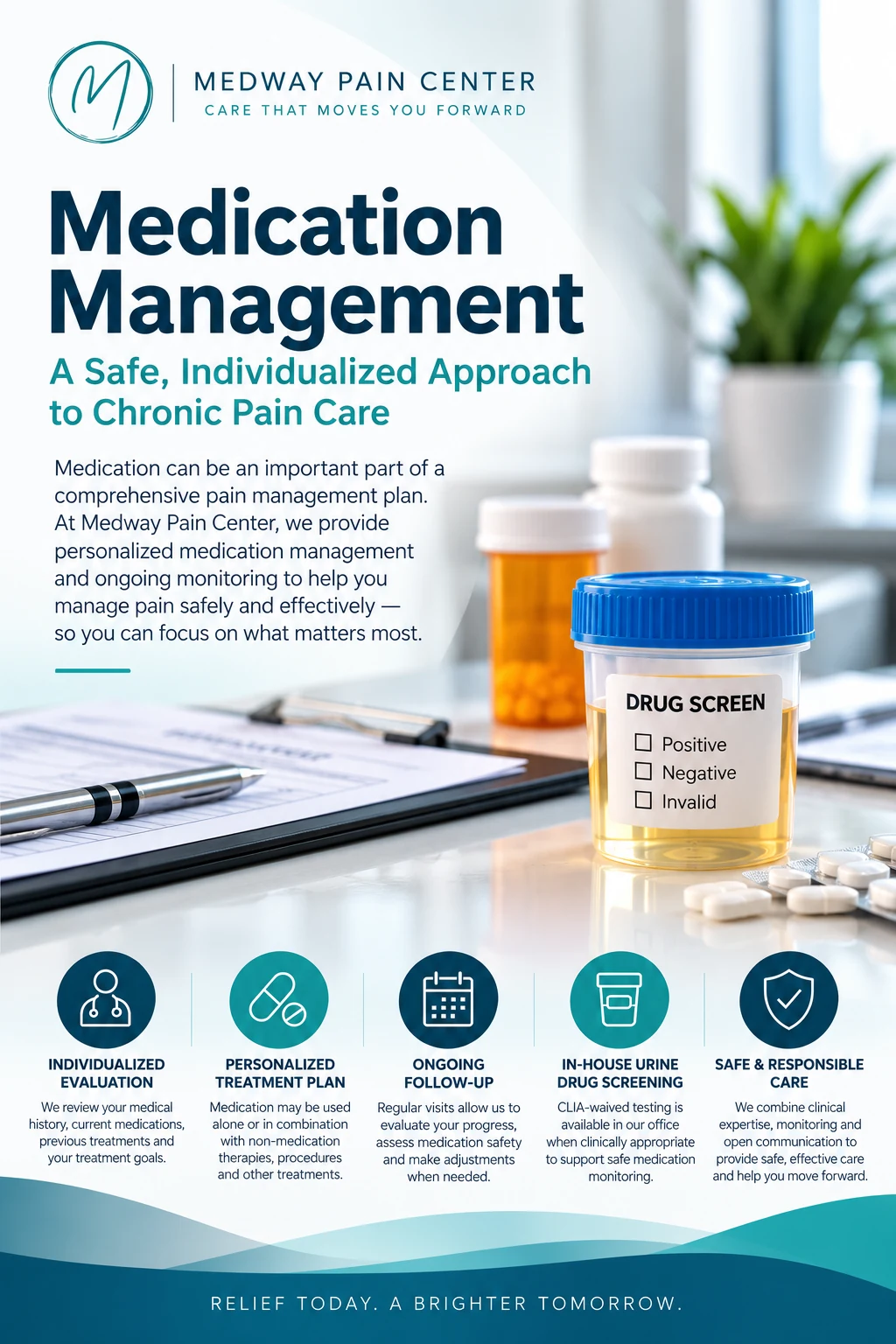
Medication may be used alone or alongside non-medication treatments, image-guided procedures and advanced pain therapies when appropriate. For patients receiving opioid medications or certain other controlled substances, follow-up and monitoring are important parts of care.
What Is Chronic Pain Medication Management?
Chronic pain medication management involves more than writing a prescription. The appropriate plan depends on your diagnosis, medical history, other medications, prior treatment response and individual clinical circumstances.
Reviewing current and previous medications
Monitoring effectiveness, side effects and safety
Adjusting care and considering other treatment options
What May Medication Management Include?
- Review of your diagnosis, history and treatment goals
- Non-opioid medication options when appropriate
- Controlled medications for selected patients when clinically appropriate
- Regular evaluation of pain, function and treatment response
- Coordination with non-medication and interventional care
Medication Is One Part of the Treatment Plan
Medway Pain Center takes a comprehensive approach to chronic pain. Depending on the cause of pain, your plan may also include physical or rehabilitative care, nerve blocks, radiofrequency ablation, spinal cord stimulation or other advanced therapies when appropriate.
- Physical or rehabilitative care
- Image-guided injections, nerve blocks or radiofrequency ablation
- Spinal cord stimulation or other advanced therapies
Controlled Medication and Opioid Management
- Considered only for selected patients when clinically appropriate
- Reviewed through regular follow-up visits
- Assessed for effectiveness, side effects and treatment safety
- An evaluation does not guarantee that an opioid or other controlled medication will be prescribed.
Follow-up visits allow the clinical team to assess pain and function, review treatment response and determine whether continuing or modifying the treatment plan is appropriate.

Regular Follow-Up for Ongoing Care
Patients receiving ongoing opioid or other controlled medication therapy generally require regular follow-up. For many patients on ongoing opioid therapy, this may include monthly clinical evaluation and urine drug monitoring according to the patient’s treatment plan and clinic policy.
Clinical Review
Evaluate pain, function, response, side effects and medication safety
Treatment Decisions
Determine whether continued or modified therapy remains clinically appropriate
Responsible Medication Monitoring

Regular clinical evaluations
Medication and treatment-response review
Safety and side-effect assessment
Urine drug screening when clinically appropriate
Who May Benefit from Medication Management?
An individualized evaluation may be helpful when:
- Chronic pain continues to affect daily function
- Previous medications have not provided enough relief
- Medication safety or side effects need closer review
- Medication must be coordinated with other pain treatments
Your evaluation will consider your diagnosis, medical history, previous treatment response and individual clinical circumstances.
In-House Urine Drug Screening and Medication Monitoring
For patients receiving certain controlled medications, urine drug testing may be used as part of ongoing medication monitoring. Medway Pain Center provides CLIA-waived urine drug screening in the clinic so preliminary screening information can be considered during the clinical evaluation.
- Screening may provide information about prescribed medications and other relevant substances
- Results are interpreted with medication history, clinical evaluation and treatment response
- Unexpected results may require discussion and, when appropriate, definitive laboratory testing
In-office screening is presumptive, not definitive. Medway does not offer general employment, DOT, probation or court-ordered drug testing.
Frequently Asked Questions
Does Medway Pain Center prescribe opioid medications?
Controlled medications, including opioid medications, may be considered for selected patients when clinically appropriate. They are not appropriate for every patient, and an evaluation does not guarantee that an opioid or other controlled medication will be prescribed.
Will Medway continue the opioid medication prescribed by my previous doctor?
Not automatically. New patients receive an individualized evaluation before a treatment plan is established. Previous prescriptions, medical records and medication history may be reviewed, but a previous opioid prescription does not guarantee that Medway Pain Center will continue the same medication or dosage.
Why does a pain management doctor order urine drug testing?
Urine drug testing can provide information that helps clinicians safely manage certain controlled medications. Results are considered along with the patient’s prescribed medications, medical history, clinical evaluation and treatment response.
Does Medway Pain Center perform urine drug testing in the clinic?
Yes. Medway Pain Center provides CLIA-waived in-house urine drug screening when clinically appropriate as part of patient care and medication monitoring.
What happens if a urine drug screening result is unexpected?
An unexpected screening result does not necessarily provide a definitive answer. Screening tests have limitations. When clinically appropriate, additional information or definitive laboratory testing may be used to clarify a result before significant treatment decisions are made.
Will I need a urine drug test at every appointment?
Testing frequency depends on the patient’s treatment plan, medications, clinical circumstances and clinic policy. Patients receiving ongoing controlled medication therapy may require regular urine drug monitoring.
Does medication management always involve opioid medication?
No. Medication management is individualized and may include non-opioid medications or other therapies. Interventional and non-medication treatment options may also be considered based on the cause of pain and the patient’s clinical needs.
Does Medway provide employment, DOT or court-ordered drug testing?
No. Medway Pain Center’s urine drug testing is intended for clinical medication monitoring as part of patient care, not general employment, DOT, probation or court-ordered drug testing.
Schedule a Medication Management Evaluation in El Paso
Talk with Medway Pain Center about an individualized chronic pain treatment plan.
Se habla español.