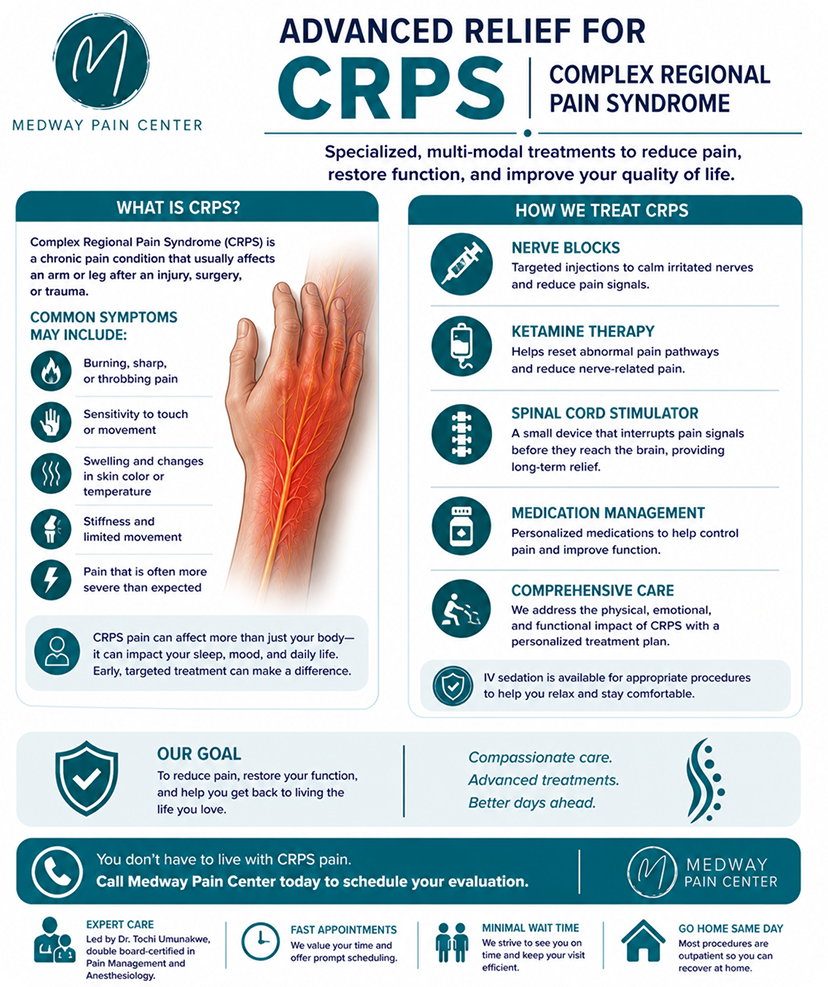
How We Determine the Cause of Your CRPS Symptoms
Complex Regional Pain Syndrome can develop after an injury, surgery, fracture, sprain, or other trauma, but the pain often becomes more intense and persistent than expected. At Medway Pain Center, evaluation focuses on your history, physical examination, pain pattern, swelling, temperature or skin color changes, sensitivity to touch, movement limits, and how symptoms have changed over time.
The goal is to confirm whether the symptoms fit CRPS and to identify any overlapping pain sources that may also need treatment.
Choosing the Right Treatment for Your CRPS
CRPS treatment often requires a step-by-step plan because symptoms can involve nerve sensitivity, inflammation, circulation changes, movement loss, and severe pain signaling. Some patients benefit from coordinated conservative care, while others may need targeted procedures or advanced therapies.
- Nerve blocks may help target nerve-related pain pathways and support diagnosis in selected cases.
- Spinal cord stimulation may be considered for persistent CRPS when other treatments have not provided enough relief.
- Trigger point injections may be used when muscle guarding or painful trigger points contribute to symptoms.
- Epidural steroid injections may be considered when a separate spinal nerve irritation pattern is also present.
Why One Procedure May Be Better Than Another
Different treatments address different parts of the CRPS picture. A nerve block may target nerve signaling, trigger point injections focus on painful muscle areas, and spinal cord stimulation is reserved for carefully selected chronic cases. Epidural steroid injections are not a standard CRPS treatment by themselves, but may be useful when exam findings suggest a separate spine-related nerve component.
Choosing carefully helps avoid unnecessary procedures and improves the chance that treatment matches your actual diagnosis.
Your Treatment Journey at Medway Pain Center
Your care usually begins with an evaluation, diagnosis, and review of prior treatments or imaging. From there, Dr. Tochi Umunakwe and the Medway Pain Center team explain your options, discuss conservative and interventional choices, and build a plan based on your symptoms, exam findings, and goals.
The focus is to reduce pain, improve function, and help you return to daily activities with a plan that makes clinical sense for your condition.