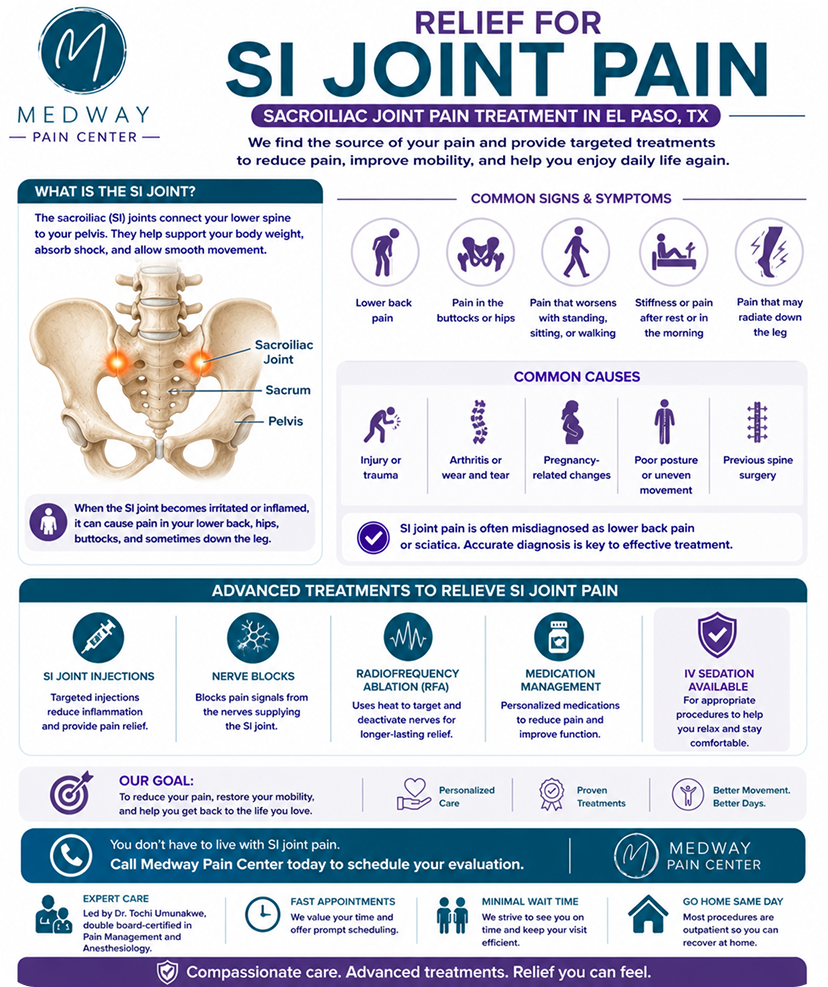
How We Determine the Cause of Your SI Joint Pain
SI joint pain can come from inflammation, arthritis, pregnancy-related pelvic changes, prior injury, uneven stress across the pelvis, spine problems, or altered movement after surgery. Pain may be felt in the low back, buttock, hip, groin, or upper leg and can sometimes resemble sciatica. At Medway Pain Center, evaluation begins with a careful history, physical examination, review of imaging when available, and attention to which movements or positions reproduce your pain.
The goal is to determine whether the sacroiliac joint is the main pain source and whether nearby structures such as the lumbar spine, hip, or surrounding muscles are also contributing.
Choosing the Right Treatment for Your SI Joint Pain
Treatment depends on whether pain is coming primarily from the SI joint, surrounding ligaments or muscles, lumbar spine irritation, or more than one source. Some patients improve with conservative care, while others may benefit from targeted image-guided procedures.
- Joint injections may help diagnose or reduce inflammation when the SI joint is the suspected pain source.
- Radiofrequency ablation may be considered when diagnostic testing supports an SI joint nerve target and longer-lasting relief is appropriate.
- Trigger point injections may be used when tight or painful muscles around the low back, buttock, or hip contribute to symptoms.
- Epidural steroid injections may be appropriate when lumbar spine nerve irritation is also part of the pain pattern.
Why One Procedure May Be Better Than Another
Different procedures address different pain sources. Joint injections target inflammation inside or around the SI joint, while radiofrequency ablation is considered only after diagnostic testing supports the target. Trigger point injections focus on painful muscle contributors, and epidural steroid injections are reserved for cases where spine-related nerve irritation is also suspected.
Choosing carefully helps avoid unnecessary procedures and improves the chance that treatment matches your actual diagnosis.
Your Treatment Journey at Medway Pain Center
Your care usually begins with an evaluation, diagnosis, and review of prior treatments or imaging. From there, Dr. Tochi Umunakwe and the Medway Pain Center team explain your options, discuss conservative and interventional choices, and build a plan based on your symptoms, exam findings, and goals.
The focus is to reduce pain, improve function, and help you return to daily activities with a plan that makes clinical sense for your condition.