Is SGB used for CRPS?
SGB is used in pain medicine when CRPS or other sympathetically maintained pain affects the upper extremity and the physician believes sympathetic nerve activity may be contributing to symptoms.

A stellate ganglion block (SGB) is a targeted injection performed near a group of sympathetic nerves in the lower neck. These nerves help regulate automatic body functions and can also contribute to certain types of sympathetically maintained pain. At Medway Pain Center in El Paso, SGB may be considered for carefully selected patients when symptoms suggest that the sympathetic nervous system is contributing to ongoing pain.
Stellate ganglion blocks have a long history in pain medicine and may be used for conditions such as complex regional pain syndrome (CRPS), certain neuropathic pain conditions, and other pain involving abnormal sympathetic activity. SGB has also been studied for PTSD symptoms, particularly hyperarousal, although this use remains an evolving area of care and is not considered a replacement for established PTSD treatment.
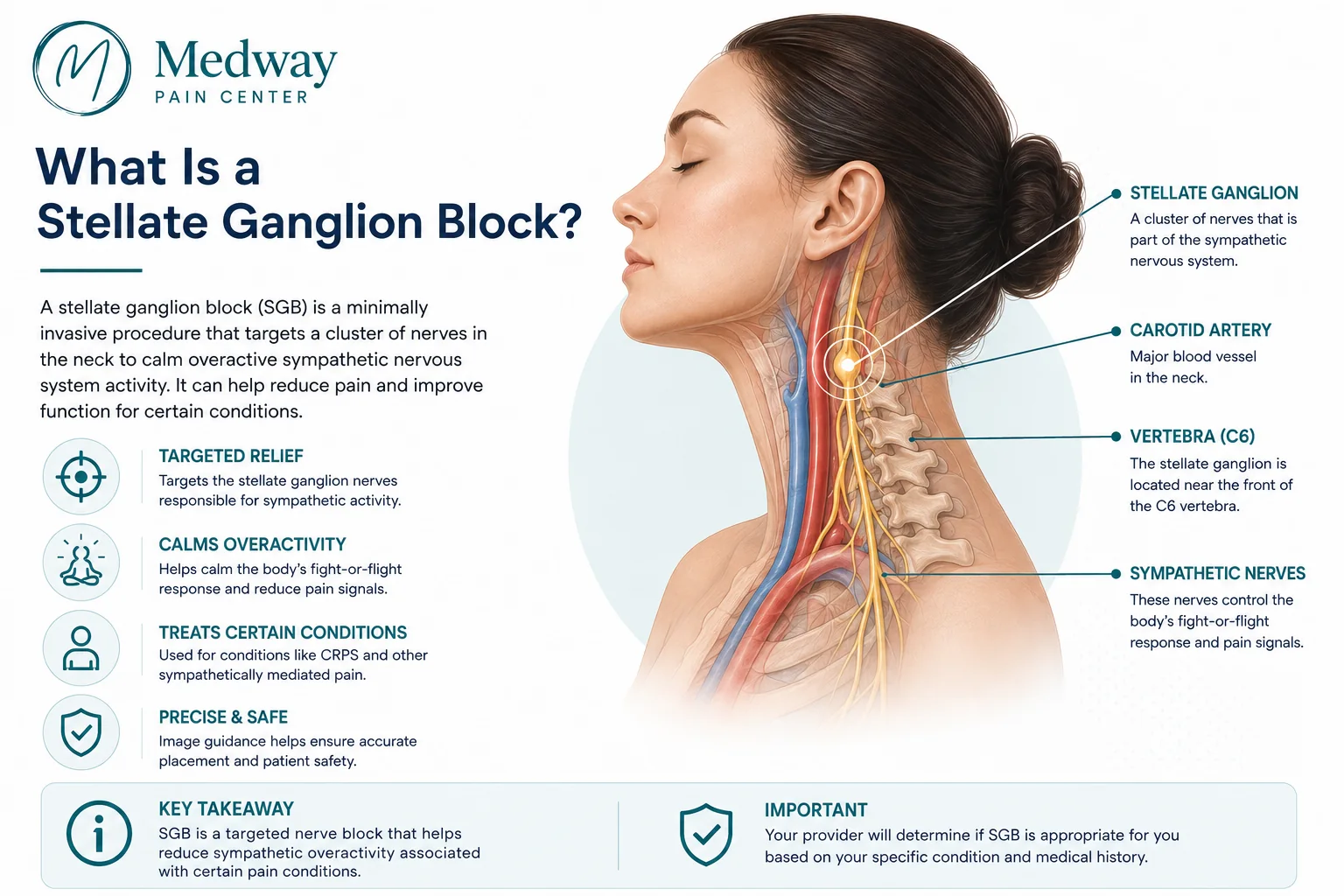
The stellate ganglion is a collection of sympathetic nerves located in the lower part of the neck. It carries sympathetic nerve signals to areas including the head, neck, upper chest and upper extremity. Temporarily blocking these signals with local anesthetic can help your physician evaluate whether the sympathetic nervous system is contributing to pain and, in selected patients, may provide symptom relief.
SGB may be considered for selected patients with upper-extremity Complex Regional Pain Syndrome (CRPS), sympathetically maintained neuropathic pain, selected chronic pain after injury or surgery, and other pain conditions in which sympathetic nerve activity is suspected to contribute.
SGB has also been studied as an adjunctive intervention for PTSD. Patients seeking SGB primarily for PTSD should undergo an appropriate clinical assessment and should continue working with their mental-health treatment team.
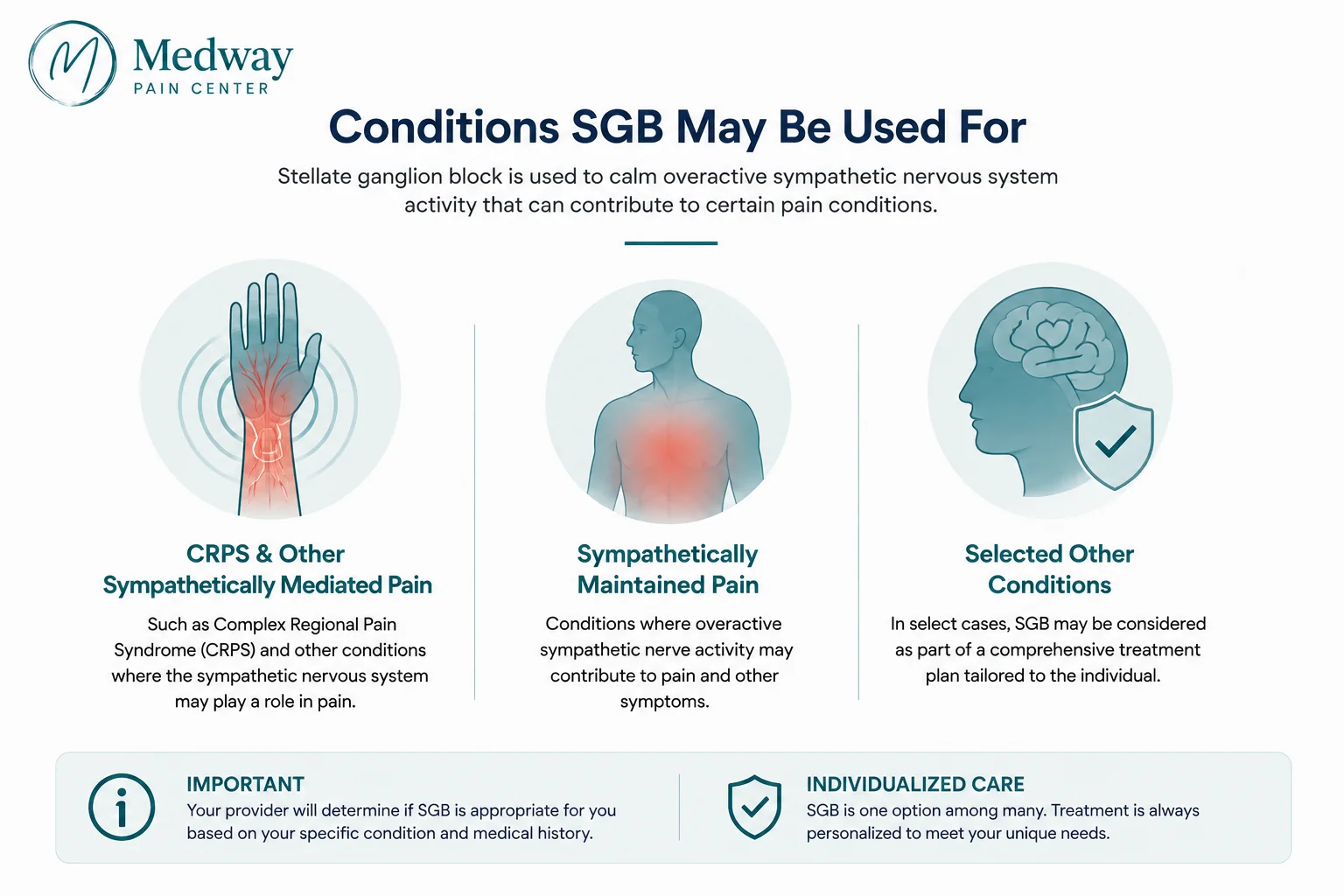
Not every patient with chronic pain or PTSD symptoms is a candidate for a stellate ganglion block. Your evaluation includes a review of symptoms, medical history, medications, previous treatments and the reason SGB is being considered.
For pain conditions, the distribution and characteristics of pain help determine whether a sympathetic component may be present. For patients interested in SGB for PTSD, Medway evaluates the procedure as a potential adjunct rather than a substitute for comprehensive PTSD care.
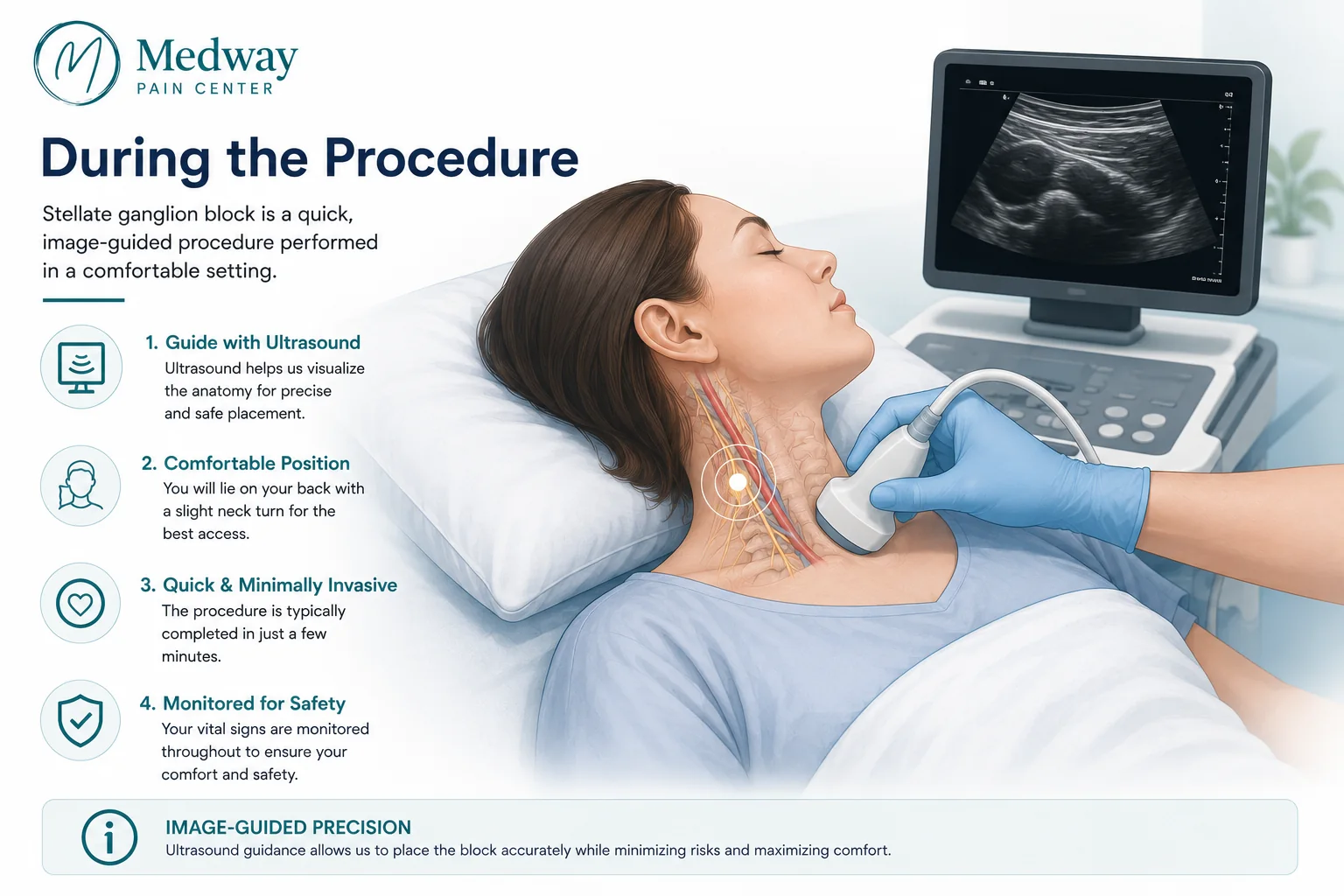
SGB is performed as a targeted injection in the neck using image guidance to help place medication near the intended sympathetic nerves while avoiding nearby structures. The exact technique, medication and side selected depend on clinical judgment. Patients are monitored before and after the procedure.
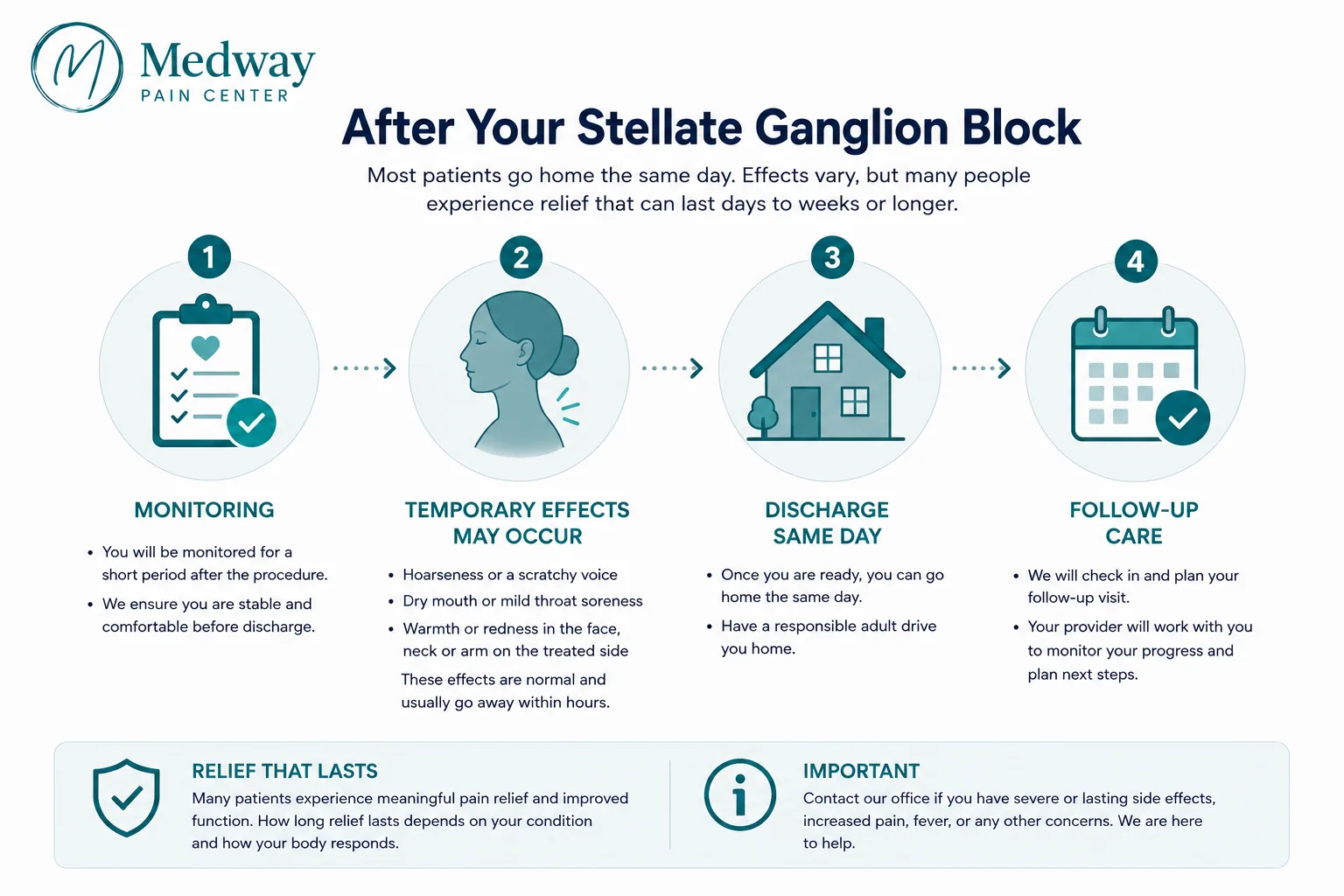
Temporary effects can occur because the sympathetic nerves have been blocked. These may include warmth in the arm or hand, a hoarse voice, nasal stuffiness, eye redness, or temporary drooping of the eyelid on the treated side. These effects are generally short-lived. Your physician will review expected effects and warning signs before discharge.
As with any injection near the neck, SGB has potential risks. These can include bleeding, infection, unintended nerve effects, difficulty swallowing, vascular injury and other uncommon complications. Careful patient selection, image guidance and appropriate monitoring are important parts of the procedure.
Research has examined whether SGB may reduce certain PTSD symptoms, including symptoms associated with hyperarousal. Some research has reported short-term symptom improvement, while the overall evidence remains limited. SGB for PTSD should be understood as an adjunctive, non-FDA-approved use under study and not as first-line, stand-alone, or curative PTSD care.
Insurance coverage for SGB varies by diagnosis and plan. When SGB is being considered for PTSD, coverage may be limited. Medway Pain Center may offer a self-pay option for appropriately selected patients. Pricing is discussed only after owner-approved clinical and scheduling guidance.
SGB is used in pain medicine when CRPS or other sympathetically maintained pain affects the upper extremity and the physician believes sympathetic nerve activity may be contributing to symptoms.
No. SGB is not an FDA-approved treatment for PTSD. Its use for PTSD is an evolving adjunctive application and evidence remains under study.
No. Patients with PTSD should continue evidence-based mental-health care. SGB, when considered, is an adjunctive intervention rather than a replacement for psychotherapy, psychiatric care or prescribed medication.
Response varies. The duration of benefit and whether another block is appropriate depend on the indication, individual response and clinical judgment.
Coverage depends on the diagnosis and insurance plan. Self-pay may be available when coverage does not apply.
Medway Pain Center can evaluate your symptoms, medical history and treatment goals to determine whether stellate ganglion block may be a reasonable option.