Is SGB a cure for PTSD?
No. SGB should not be described as a cure. It is an adjunctive intervention under study that may help selected patients with certain symptoms.

Post-traumatic stress disorder can involve persistent hyperarousal, sleep disruption, irritability, heightened startle response and other symptoms associated with an overactive stress response. Stellate ganglion block (SGB) is a procedure traditionally used in pain medicine that has also been studied as a potential adjunctive intervention for PTSD.
At Medway Pain Center, SGB for PTSD is considered only after an individual clinical evaluation. It is not a replacement for trauma-focused psychotherapy, psychiatric care or medications, and it is not an FDA-approved treatment for PTSD. The evidence is promising in some studies but remains insufficient for routine guideline endorsement.
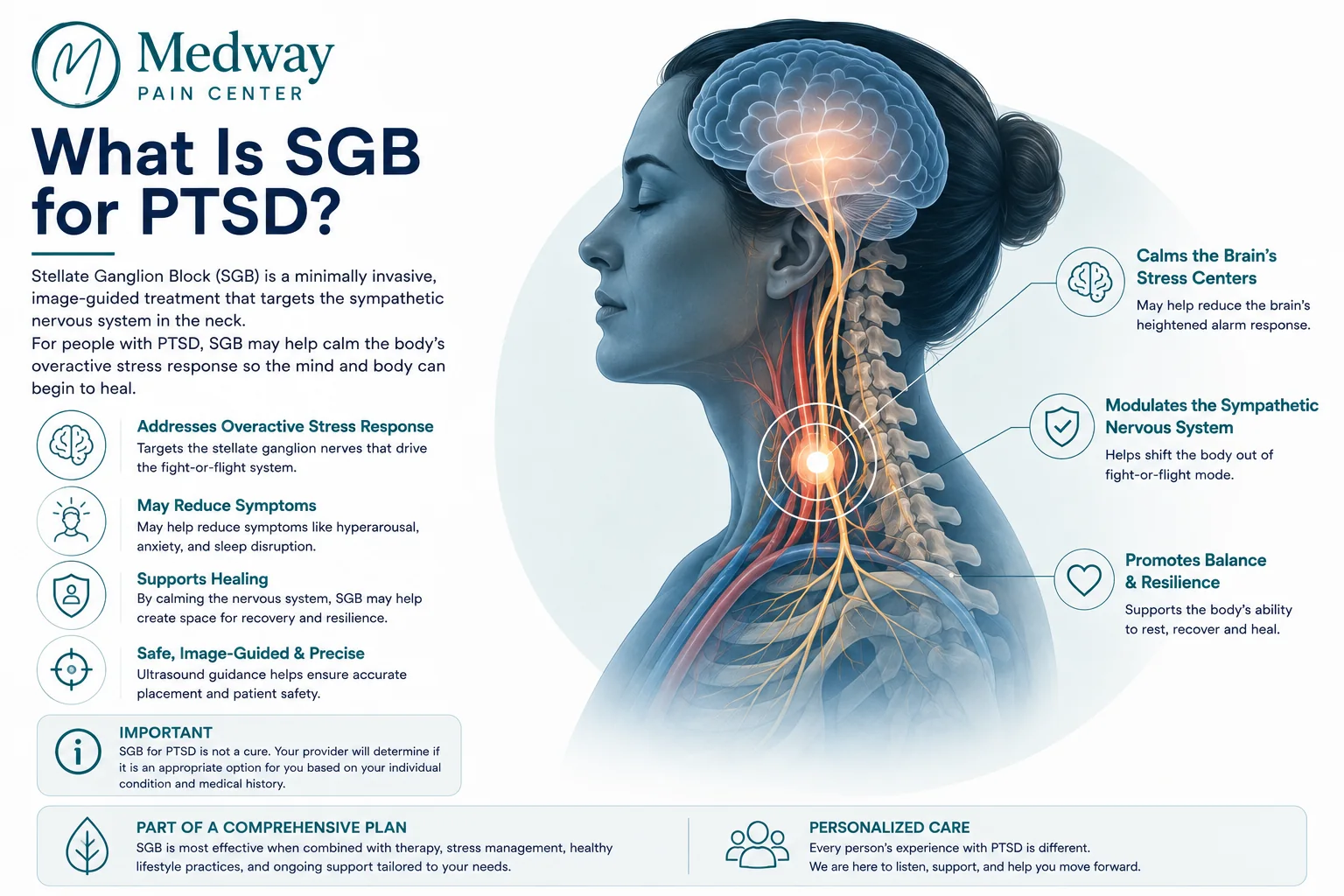
The stellate ganglion is part of the sympathetic nervous system, which helps regulate the body's fight-or-flight response. Researchers have proposed that temporarily blocking sympathetic signaling may reduce aspects of persistent hyperarousal in some patients. This proposed mechanism is one reason SGB has been studied in military and veteran populations.
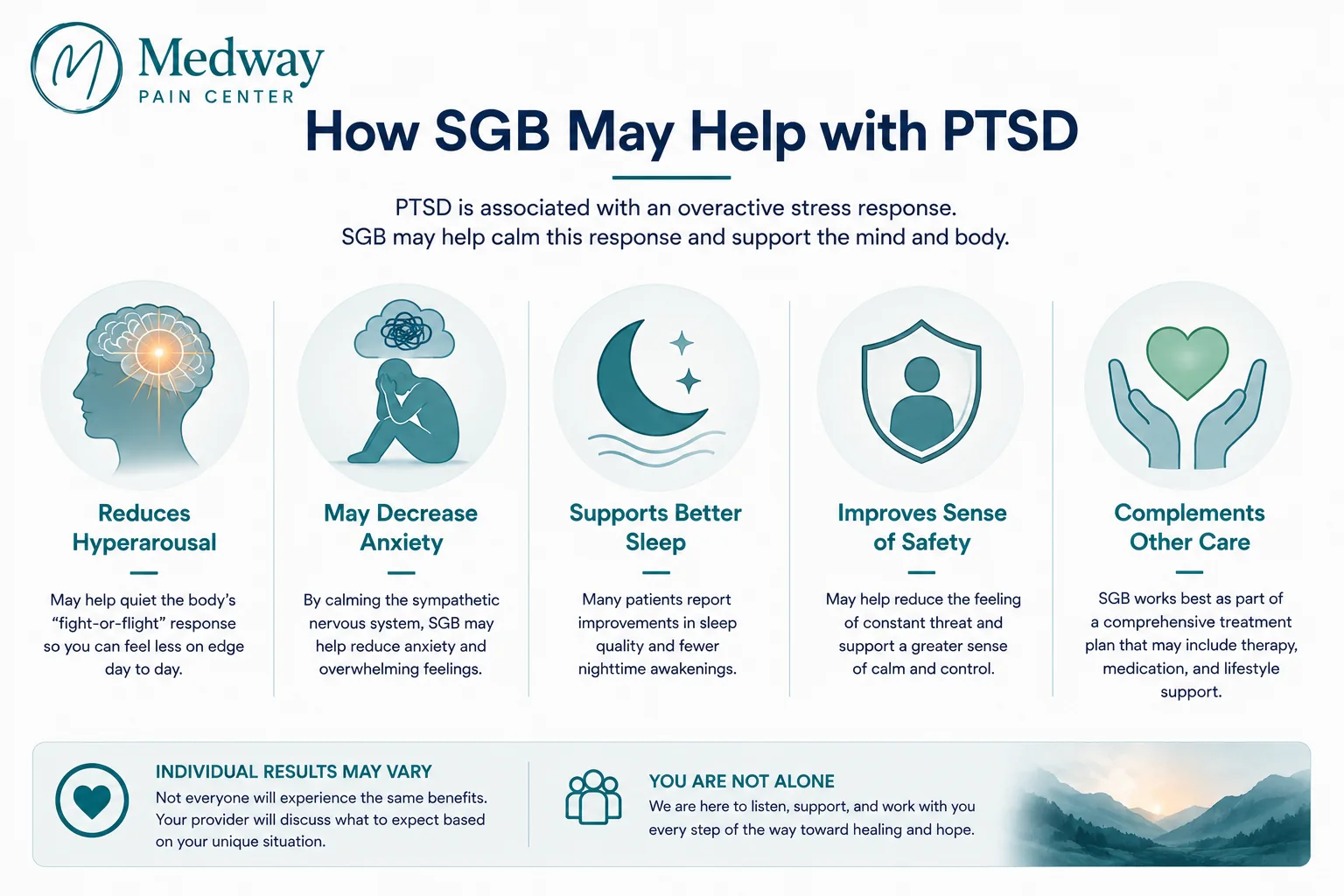
Evidence is mixed. Some controlled research has found short-term improvement in clinician-rated PTSD symptoms after SGB, while other research has not shown the same degree of benefit. This page avoids promises, cure language, guaranteed outcomes, or claims that SGB is established first-line PTSD treatment.
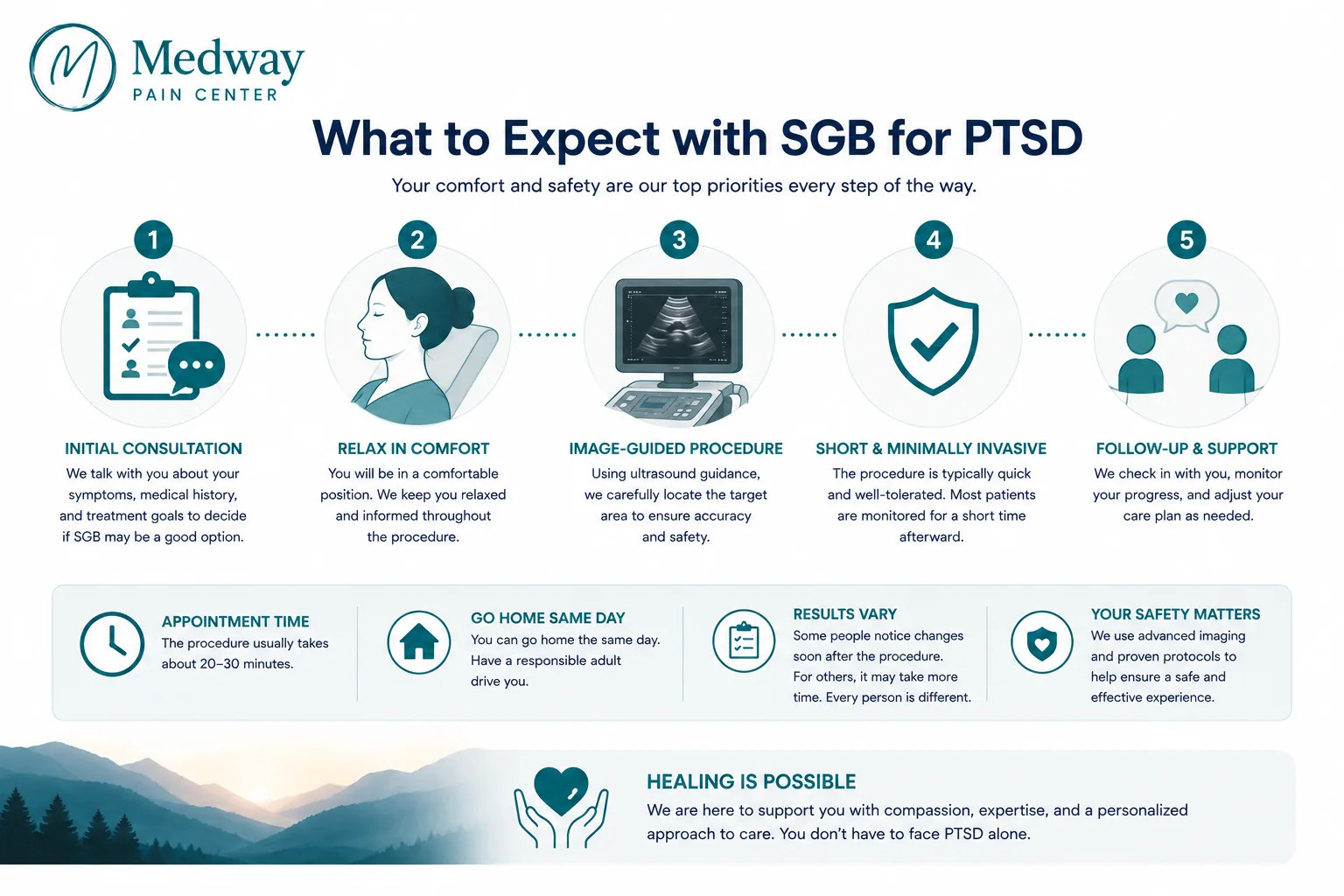
A patient asking about SGB for PTSD should first undergo an individualized evaluation. Relevant factors include current PTSD treatment, medical history, medications, symptom pattern, prior response to therapy, safety considerations and whether the patient has appropriate mental-health follow-up. SGB should not be presented as an emergency psychiatric intervention.
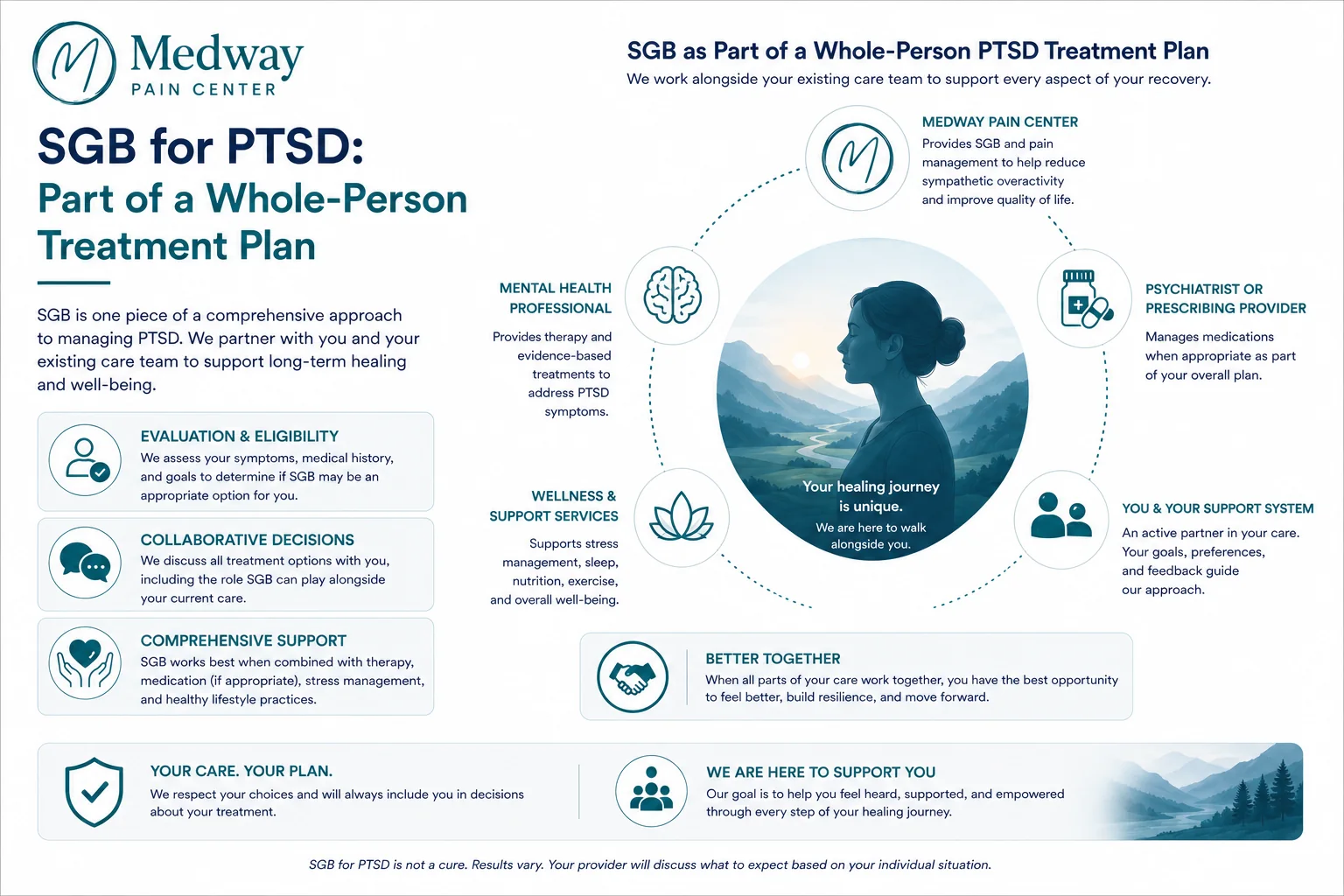
SGB may be considered as an adjunct for selected patients with persistent PTSD symptoms and may target aspects of sympathetic hyperarousal rather than every feature of PTSD.
SGB does not erase traumatic memories, replace evidence-based psychotherapy or psychiatric treatment, or guarantee improvement. Response may vary.
Because insurance coverage for SGB used for PTSD may be limited, Medway may offer a self-pay pathway for appropriately selected patients. Pricing is not published here. Patients should be evaluated before scheduling the procedure.
No. SGB should not be described as a cure. It is an adjunctive intervention under study that may help selected patients with certain symptoms.
No. SGB is not an FDA-approved PTSD treatment.
Yes, when clinically appropriate. Eligibility, clinical appropriateness and coverage must be determined individually.
Do not stop prescribed treatment unless the clinician managing that treatment tells you to do so. SGB is not intended to replace established PTSD care.
Medway Pain Center can evaluate your symptoms, medical history and treatment goals to determine whether stellate ganglion block may be a reasonable option.